
Your roof and gutters work as a team. When one fails, the other takes the hit. In Houston, that teamwork gets tested constantly. Between heavy rain, thick humidity, and a hurricane season that runs from June through November, your roof and gutter system faces more stress here than almost anywhere else in the country.
This guide breaks down what actually matters for roof and gutter maintenance, whether you own a home or manage a commercial property. Just what you need to protect your building and avoid expensive repairs.
Why Roof and Gutter Maintenance Matters in Houston
Houston sits in a humid subtropical climate zone. NOAA’s 1991 to 2020 climate data shows the city averages 51.84 inches of rain a year, with June and October as the two wettest months. That rain has to go somewhere, and your gutters are the path it takes.
When gutters clog, water backs up under the roofline. It seeps into fascia boards, soffits, and attic spaces. Given Houston’s humidity, that trapped moisture becomes a breeding ground for mold within 24 to 48 hours. The Environmental Protection Agency lists cleaning and repairing roof gutters as one of the core habits for controlling mold and moisture in a home.
For commercial buildings, the stakes are higher. Flat and low slope roofs rely on drains, scuppers, and gutters to move water off the surface. When those get blocked, water pools instead of draining. That standing water adds weight, breaks down roofing membranes, and eventually finds its way inside through seams and penetrations. Read the detailed blog on ponding water on Houston commercial roofs: what are the causes.
How Often Should You Inspect and Clean
The old “spring and fall” rule needs updating for Gulf Coast properties. Houston does not get a hard freeze to plan around, but it does get two rainfall peaks and a six-month hurricane season.

For residential properties:
- Twice a year is the baseline if your home has little tree cover
- Three to four times a year if you have live oaks, pecans, sweetgum, or pine trees nearby
- One extra downspout flush in late May, right before hurricane season opens
- A quick visual check from the ground after any tropical storm
For commercial properties:
- Monthly inspection of the entire drainage system, including roof drains and scuppers
- Professional roof inspections at least twice a year, ideally before and after hurricane season
- Immediate follow-up after any major wind or rain event
The best cleaning windows in Houston fall in late February through mid March and late November through early December, timed around when oak catkins and fall leaves drop.
Roof Maintenance Checklist
Your roof needs attention beyond just the gutters. Here’s what to check on a regular basis:
- Look for cracked, curled, or missing shingles and replace them right away
- Check flashing around chimneys, vents, and skylights for gaps or rust
- Inspect for algae, moss, or mold streaks and clean them with a mild detergent solution
- Confirm attic ventilation is working so hot, moist air can escape
- Check insulation to make sure it is not blocking soffit vents
- Trim tree branches that hang over the roofline
- After storms, look for granule loss, dents, or lifted shingles
For commercial roofs, add these to the list:
- Inspect all sealant joints around pipe penetrations
- Check clamping rings on primary roof drains to confirm they seal properly
- Walk the membrane on designated walking pads only, to avoid punctures from foot traffic
- Log the roof’s age, material, warranty status, and known trouble spots so nothing gets missed between inspections
Gutter Maintenance Checklist
Gutters do one job. They move water away from your roof, walls, and foundation. When they cannot do that job, everything downstream suffers.
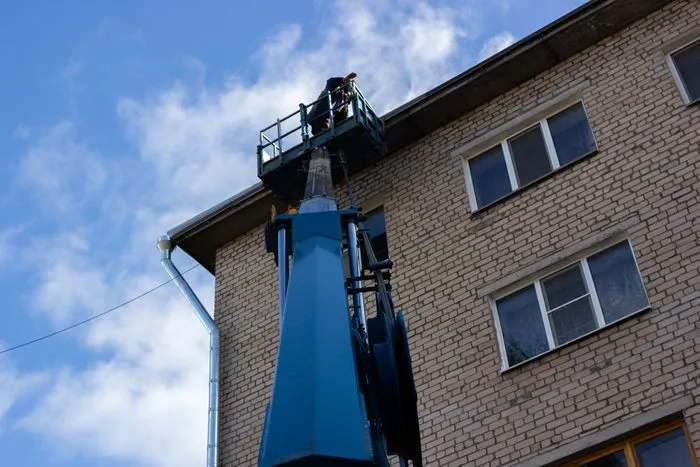
- Scoop out leaves, twigs, and debris by hand or with a gutter scoop
- Flush the full channel with a hose to confirm water runs freely
- Flush downspouts too, and check any underground drain lines they feed into
- Look for sagging sections, which usually mean loose brackets or hangers
- Check for rust spots or seam leaks, especially on older commercial systems
- Make sure downspouts empty at ground level, away from your foundation
- Consider gutter guards if falling leaves are a constant problem, since they cut down on how often you need to clean
A blocked underground drain line will back up the entire system, even if the visible gutters look clean. That’s an easy thing to miss during a quick inspection, so check it directly.
Signs You Need a Professional
Some maintenance you can handle yourself with basic tools and safety gear. Other situations call for a licensed roofer.
- Water stains appearing on ceilings or walls after rain
- Soft spots, sagging areas, or visible ponding water on a flat roof
- A musty smell in the attic, which often signals hidden mold
- Missing or damaged shingles after a storm
- Gutters pulling away from the fascia board
- Any work above a second story or on a steep pitch
Roof work at height carries real risk. If you are not equipped or trained for it, hiring a professional costs far less than an injury or a rushed repair job.
What Neglect Actually Costs You
Skipping maintenance does not save money. It just delays the bill and makes it bigger.
Clogged gutters that overflow during a storm can saturate the soil around your foundation, leading to cracks and settling. Water that backs up under your roofline can rot fascia boards, damage insulation, and trigger mold remediation that runs into the thousands. On commercial buildings, ponding water shortens the life of a roofing membrane and can void a manufacturer’s warranty if left unaddressed.
Regular maintenance, by comparison, is one of the cheapest ways to protect a roof. A yearly inspection and a couple of gutter cleanings cost a fraction of what a water damage repair or premature roof replacement runs.
Your roof and gutters protect everything underneath them. In a city like Houston, where rain, humidity, and hurricane season all work against your building, staying ahead of maintenance is the difference between a small fix and a major repair bill.
Set a schedule, stick to it, and act fast when you spot a problem. If you would rather leave the inspections and repairs to people who do this every day, the team at Houston Roofing Solution can help. Visit Houston Roofing Solution to schedule a professional roof and gutter inspection for your home or business.